
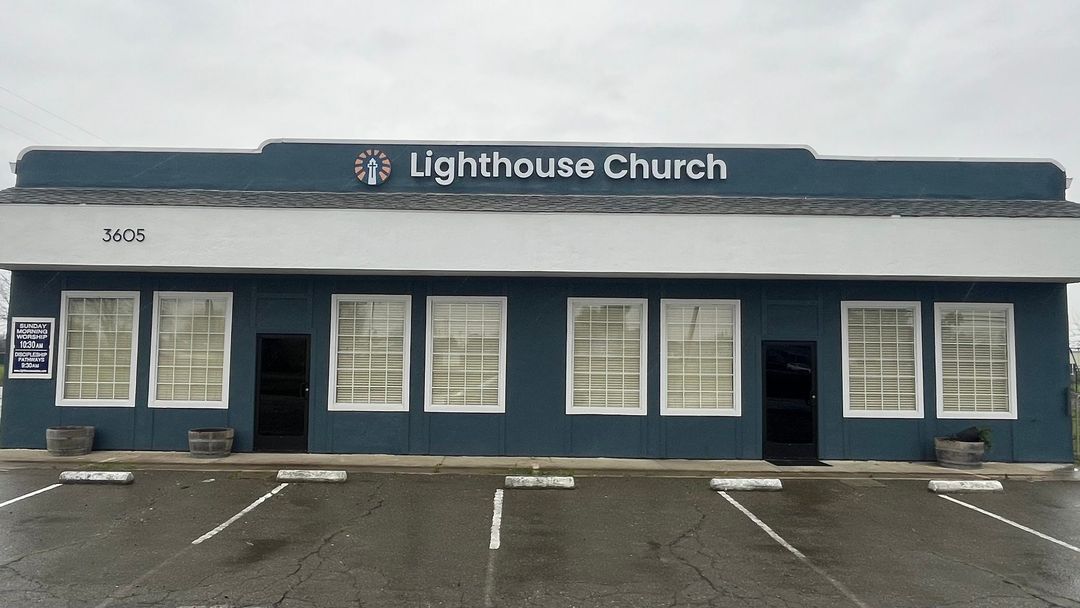
On a Sunday in October, a family decided it was time to go to church. They had been talking about it for a while, and that morning they agreed to all go together. On their way out of the house they said they would trust God to guide them to the right church. Then they looked up local churches. Lighthouse Covenant Church came up right away, and they took it as a sign. After the service they told the pastor they had found their new church.
I know this because the pastor, Rosendo Lara, wrote to tell me. Here is how his email began, after the thank-you:
By the way, your work with our website has already been fruitful. we have new people attending as a result.
There was a second family. The father’s search started online, and he spent a while on YouTube before he decided where his family would look for a new church. That Sunday was their third visit, and the first time the whole family came. They have kept coming since the first one.
Lighthouse launched its new website with us on September 9. The email came about six weeks later.
From my experience at Lighthouse, it was rare for a visitor to say they saw our website. Now it’s two in six weeks saying they made a decision to come because of it.
The first welcome happens before the front door
Churches take the front door seriously. A volunteer stands by the door on a Sunday morning, ready with a smile and a bulletin. Another makes sure the coffee and doughnuts are set out. We call this hospitality.
The word the New Testament uses for it is philoxenia, built from two Greek words: love and stranger. It is love aimed at the person you haven’t met yet, who hasn’t decided whether to come.
That first family met Lighthouse before anyone at Lighthouse met them. A web search led to the website, and the website became the church’s first welcome to them. The family found hospitality in a website written with them in mind.
That is the why behind everything in this post. A wrong service time is a locked door. A homepage that tells a first-time visitor nothing is a host who never looks up. And a page that says “Participate as much or as little as you’d like” is someone at the door telling you you’re welcome before you’ve said a word.
At Aeris Labs we call the way we work stewardship, but hospitality is the reason a church website is worth building at all.
What Google Maps shows
We use a tool called Semrush to follow how Lighthouse appears in Google Maps for the term “christian church.” That search displays Lighthouse and every other church around that area. In the latest report, Lighthouse is number one out of 45 local churches.
In plain words, someone near West Sacramento who opens Google Maps and searches “christian church” will usually see Lighthouse first or second.
What we did
The part that matters most is the part every visitor sees: the words.
Julie, our in-house digital marketing expert, wrote the pages a newcomer reads first. They answer what a family wonders before a first visit: who meets you at the door, where the kids go, how long the service runs, and whether anyone will put you on the spot. Julie’s answer to that last one sets the tone for the whole site: “Participate as much or as little as you’d like. There’s no pressure — we’re simply glad you’re here.”
I wrote the pages about what Lighthouse believes and why it exists. A family looking for a church wants to know where it stands before they walk in, and those pages say it plainly: God loves us, Jesus came to rescue us, and a life of following Him is the best life there is.
The rest of the work helps people find those words.
The website tells search engines what Lighthouse is, in the structured format they read alongside the words on the page: a church, at an exact location in West Sacramento, with its service times, a current phone number and a point on the map. A visitor never sees that data, but Google reads it.
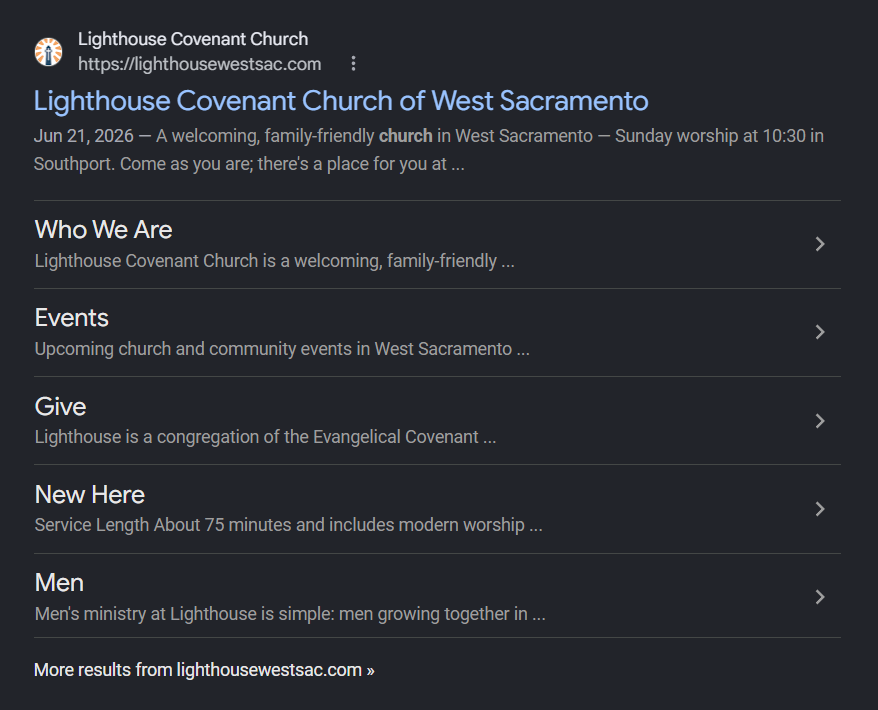
We worked out the words people type when they look for a church in West Sacramento, and wrote the pages so those words appear where they are true. One of the more useful findings was about the church’s own name. To many newcomers “Covenant” sounds like real estate or a video game, so the full name appears in the places search engines weigh most, and everywhere else the site says “Lighthouse,” the way the congregation does. Here is what a search shows before anyone clicks:
The church had two phone numbers loose on the internet, an old one and a current one. The most visible one was on the church’s Google Business Profile, the listing that shows up in Google Maps, and I corrected it there before the new website launched. Several church directories had the old number too, and I sent corrections to every directory that accepts them. It is tedious work, but Google draws on listings from across the web when it judges a church’s listing, and two different phone numbers don’t help.
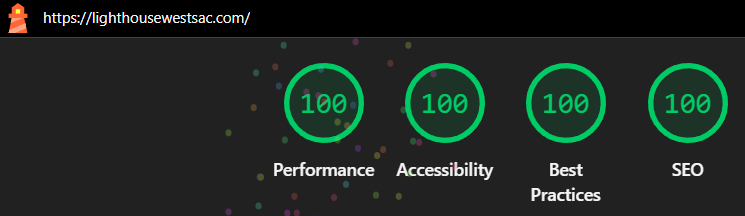
And the pages are small and fast, because the person deciding whether to visit is usually on a phone. Google builds a page-quality test into Chrome, and by coincidence it’s called Lighthouse too. On desktop, it scores the site 100 in all four categories.
What moves a Google Maps ranking
A Google Maps position is not decided by the website alone. Google also weighs the church’s business listing, its reviews, and how far the person searching is from the building. We worked on the listing. The reviews are the congregation’s, and the distance is geography. The goal was to look after every last detail in our control that would affect search ranking, on the website or not.
A website can help people find the door, but two families stayed because of the human hospitality they found at Lighthouse.
If you lead a church
Here is a test that needs no tool and no vendor, including us.
Stand somewhere a few miles from your church, open Google Maps on your phone, and search “christian church,” or “church” and the name of your town. See where you appear. Then tap through to your website the way a stranger would, and check three things: the service time is right, the address is right, and a first-time visitor can tell what to expect.
If one of them fails, that’s where your hospitality starts.
Before you go
Picture the first family on their way out the door, trusting they would be led somewhere, with a phone in hand. If a family near you did that this Sunday, what would they find when they searched?
Your church already knows how to welcome a stranger at the door. That welcome belongs on the page they read first.
Thank you to Pastor Lara for writing and letting me share this story. If you would like a website that does this for your church, that’s what Aeris Labs does.